
Rivet cracking is a critical defect compromising product structural integrity and safety. This analysis of the causes of rivet cracking reveals that it is not random but a clear signal of systemic process risks. Traditional methods relying on operator skill and post-process inspection are inadequate for zero-defect manufacturing. This analysis of the causes of rivet cracking details five systemic root causes and how intelligent process control with ShunTai Tech’s ST-MSF Series Servo Orbital Riveting Machines enables fundamental prevention.
In-Depth Analysis of Five Root Causes
1. Material Compatibility Failure: Mismatched hardness or ductility between rivet and base material causes non-synchronous deformation during forming, creating interfacial stress concentration and micro-crack initiation—a fundamental design risk. Any thorough analysis of the causes of rivet cracking must start here.
2. Uncontrolled & Fluctuating Process Parameters: Unstable force and stroke output from traditional pneumatic or hydraulic riveting machines cause actual riveting force to drift significantly. Overload directly cracks material, while underload creates weak joints prone to fatigue failure under vibration. This factor appears in every serious analysis of the causes of rivet cracking.
3. Latent Defects in Tooling & Fixturing: A worn or poorly finished punch nose acts as a micro-stress concentrator. Inaccurate fixture positioning or insufficient clamping force leads to part shift and uneven load distribution, causing unilateral overload and cracking. So an analysis of the causes of rivet cracking cannot ignore tooling condition.
4. Environmental & Operational Variables: Excessively low ambient temperature can increase material brittleness. Non-standard operator actions (e.g., moving parts before full retraction) may introduce unexpected sideload forces. The combination of such variables can induce cracking. Including these in your analysis of the causes of rivet cracking helps catch hidden issues.
5. The “Black Box” Process & Lack of Data: This is the core management issue. Traditional machines provide no process data, reducing quality analysis to guesswork and preventing effective root-cause prevention. Without data, any analysis of the causes of rivet cracking stays incomplete.
Systemic Prevention Strategy with the ST-MSF Series
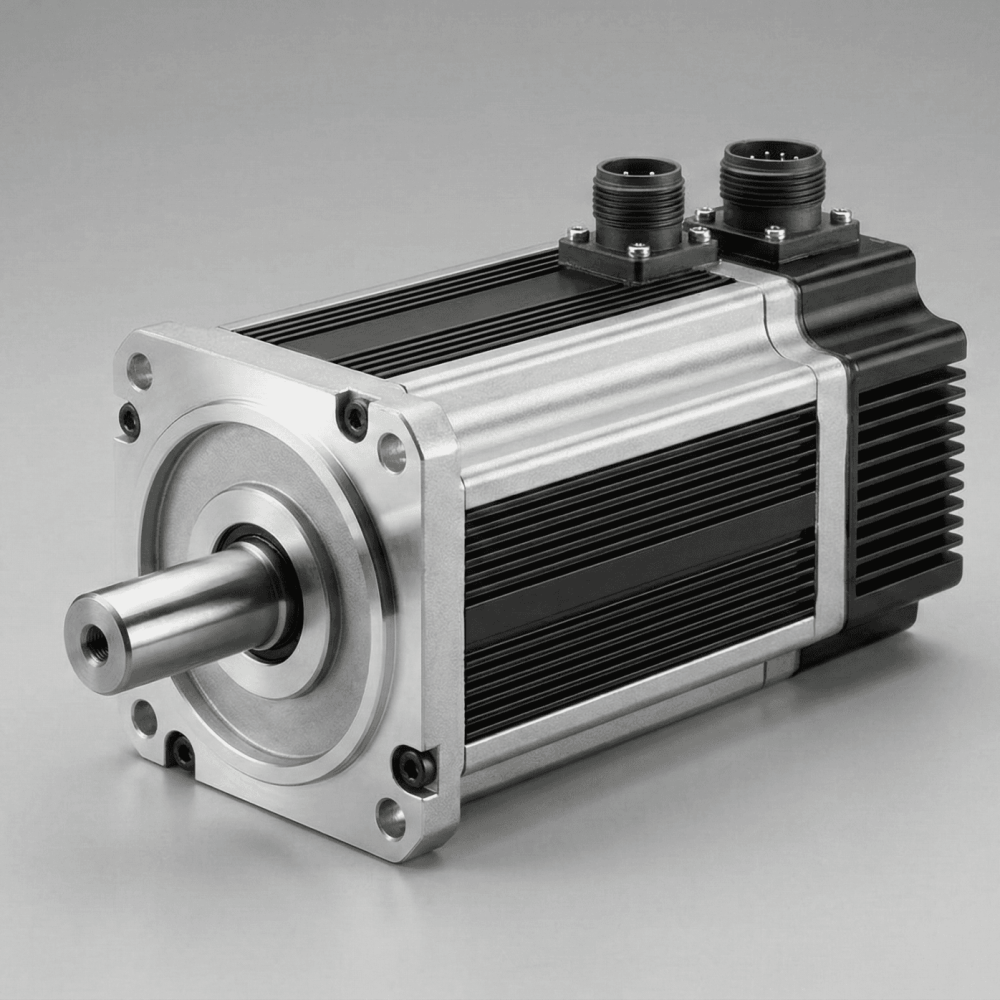
ShunTai Tech’s solution focuses on process transparency and control precision. The ST-MSF Series Full Digital Servo Orbital Riveters utilize high-response servo motors and linear encoders to achieve real-time dual-loop PID control of force and position, eliminating parameter drift at the hardware level. Its built-in Adaptive Process System (APS) automatically fine-tunes parameters for material batch variations, finding the most stable forming window. Crucially, key data from every cycle—the complete force-displacement curve, peak force, cycle time—is recorded, providing a solid foundation for quality traceability and Statistical Process Control (SPC). This turns your analysis of the causes of rivet cracking from reactive guesswork into proactive, data-driven prevention.
Rivet cracking is a critical defect in riveting operations—one that is absolutely unacceptable. While there are numerous causes for rivet cracking, thoroughly eliminating or preventing it requires comprehensive control across every stage: design, material selection, processing, heat treatment, surface treatment, assembly environment, and tooling/fixturing. These measures constitute the fundamental “active defense.” Naturally, this must be complemented by “passive defense” strategies—such as utilizing more intelligent riveting equipment and conducting visual inspections of riveted components—to effectively manage the occurrence of cracks. The ultimate goal is to prevent defective, cracked rivets from reaching customers or end-users, thereby mitigating quality risks and enhancing overall product reliability.
Conclusion
Preventing rivet cracking is a systematic endeavor. By choosing an intelligent system like the ShunTai Tech ST-MSF Series, companies gain not only high-precision execution but also a data-centric preventive quality assurance framework. A solid analysis of the causes of rivet cracking combined with servo control delivers essential technological support for manufacturing highly reliable joints.
Still not sure which technology fits your parts? We get it. Every application is a little different—material type, joint strength, production volume, even shop floor layout matters. Shuntai’s engineers have worked through hundreds of these comparisons. No hard sell, just honest input. If you want a second pair of eyes on your spec sheet or a quick cost estimate, drop us a line. We’ll share what we’ve learned (the hard way, so you don’t have to).