
Smart Riveting Is the Future of Sustainable Production
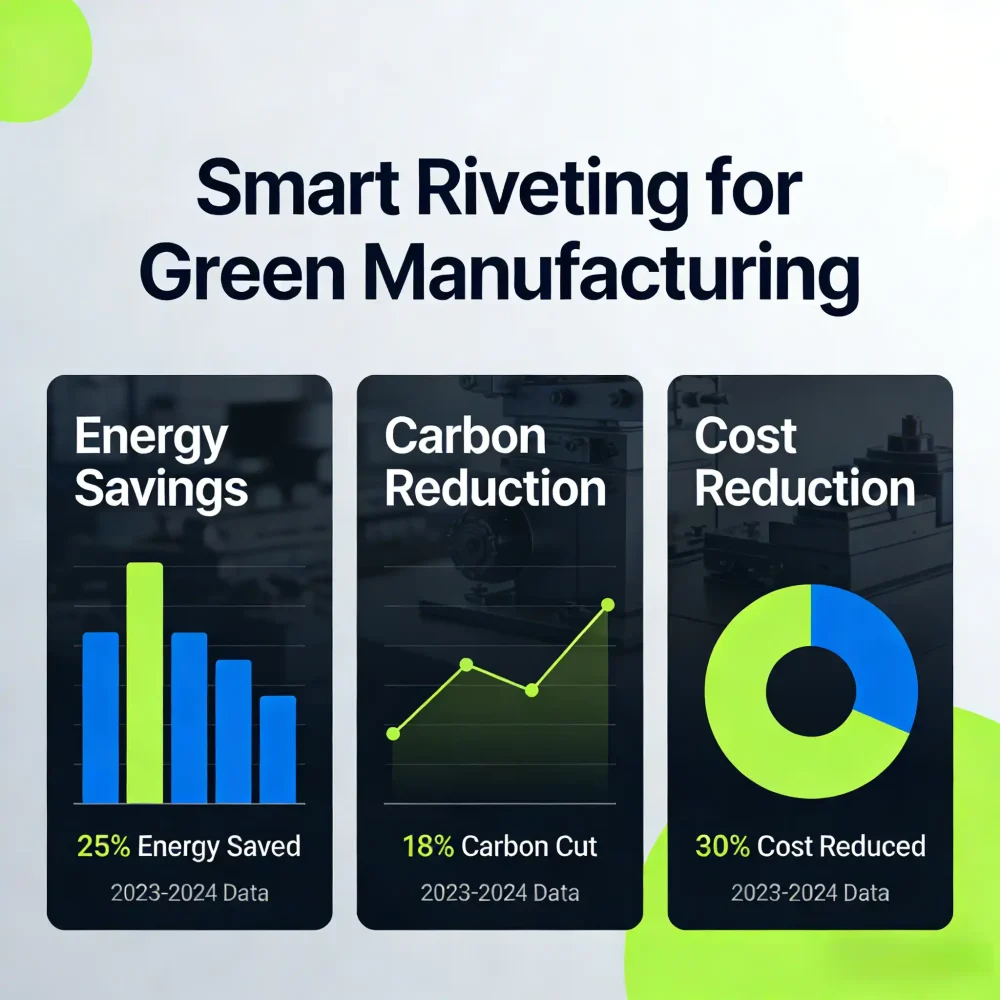
In the global push for sustainable development, “green manufacturing” has become a must-have for competitive companies. Riveting is an energy-hungry process in many production lines. So improving efficiency, lowering operating costs, and building a green brand image—that’s where smart riveting comes in. It gives you both economic and environmental wins.
So what makes smart riveting so green? Let me break down the numbers.
1. Traditional Riveting Equipment Eats Energy Like Crazy
Here’s the ugly truth about old-school systems:
Pneumatic systems: They rely on compressors to turn electricity into compressed air. But overall energy utilization? Below 15%. Sometimes as low as 10%. The compressor runs constantly—even when no riveting is happening. Air leaks, no-load exhaust, all waste electricity and pump out carbon emissions. One study shows pneumatics need about 12 watts of input for every 1 watt of useful work. That’s insane.
Hydraulic systems: Motors run all the time to keep system pressure. During no-load and pressure-holding phases, pressurized oil just bypasses through relief valves—turning electricity into useless heat. System efficiency typically runs 30-50%. Plus you need extra cooling systems that eat even more power. Hydraulics need about 2 watts input for every 1 watt of output.
When you do the math, traditional systems are basically burning money. That’s why smart riveting is such a big deal.
2. On-Demand Power, Zero Waste
changes the game completely. Here’s how:
Servo motors only pull significant power during the working and return strokes. During idle waiting? Power consumption drops to near zero. No continuous compressors running. No oil pumps wasting energy. No overflow losses. No heat waste. Electric cylinders like those in smart riveting systems can hit efficiency rates up to 80%.
Think about it. A smart riveting machine sleeps when it’s not working. Your old pneumatic system? It’s always hungry. That’s the difference.
3. Quantifiable Benefits: Good for the Planet, Good for Your Wallet
Environmental benefits: Compared to pneumatic systems with the same output, smart riveting can save tens of thousands of kWh per year. CO2 emissions drop by several tons annually. One study found switching to servo cylinders cuts CO2 emissions by 3,500kg to 5,600kg yearly—about 7,700 to 12,300 pounds.
Economic benefits: Lower electricity bills. No cooling system costs. No filter replacements. No hydraulic oil handling or disposal expenses. Less hazardous waste. Your maintenance costs can drop by 60% or more. The ROI for smart riveting pays back fast—usually under 12 months.
4. Beyond Energy: The Full Green Value of Smart Riveting
Here’s what else smart riveting brings to the table:
Clean production: No oil mist emissions. No risk of hydraulic oil leaking into soil or groundwater. Your factory stays cleaner.
Low-noise operation: Way quieter than pneumatic or hydraulic systems. Your operators will thank you. Plus you meet occupational health standards easier.
Resource efficiency: Smart riveting delivers high process stability and low scrap rates. Less scrap means less raw material waste and less embodied energy thrown in the trash. That’s green manufacturing at its core.
ESG and green supply chain cred: International brands now look at ESG performance and sustainability metrics. ISO 14001 certification is often required. Having smart riveting in your production line is a legit competitive advantage for winning green supply chain contracts.
Conclusion
Choosing ShunTai Technology’s high-efficiency servo orbital riveting machines is a strategic move. It combines environmental responsibility with economic smarts. Smart riveting isn’t just a tool for cutting your carbon footprint—it’s a core asset for building a sustainable manufacturing future. So if you’re still running pneumatics or hydraulics, ask yourself: what are you waiting for? Make the switch to smart riveting today.