
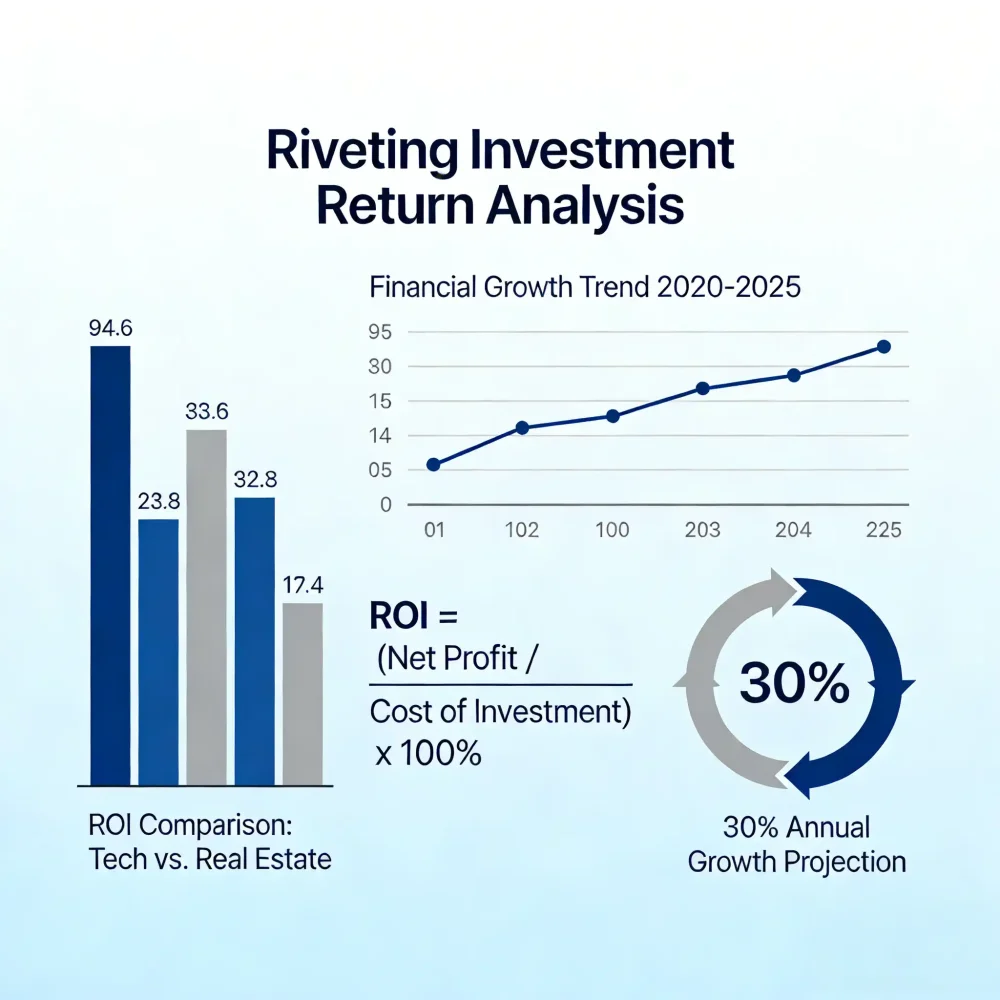
We studied the issue of ROI Riveting Investment Return Analysis:For decision-makers considering the purchase of high-end servo-driven riveting machines, the core question is: “How long is the return on investment period?” This is not a simple price comparison; it’s a comprehensive financial calculation encompassing productivity, quality costs, energy, and maintenance costs. Analysis shows that while servo-driven riveting machines may have a higher initial investment, they often deliver faster and higher returns through significant operational efficiencies. This return on investment analysis for riveting machines provides a model.
Presented below is a detailed examination of the ROI aRiveting Investment Return Analysis:
1. Building a Return on Investment Model
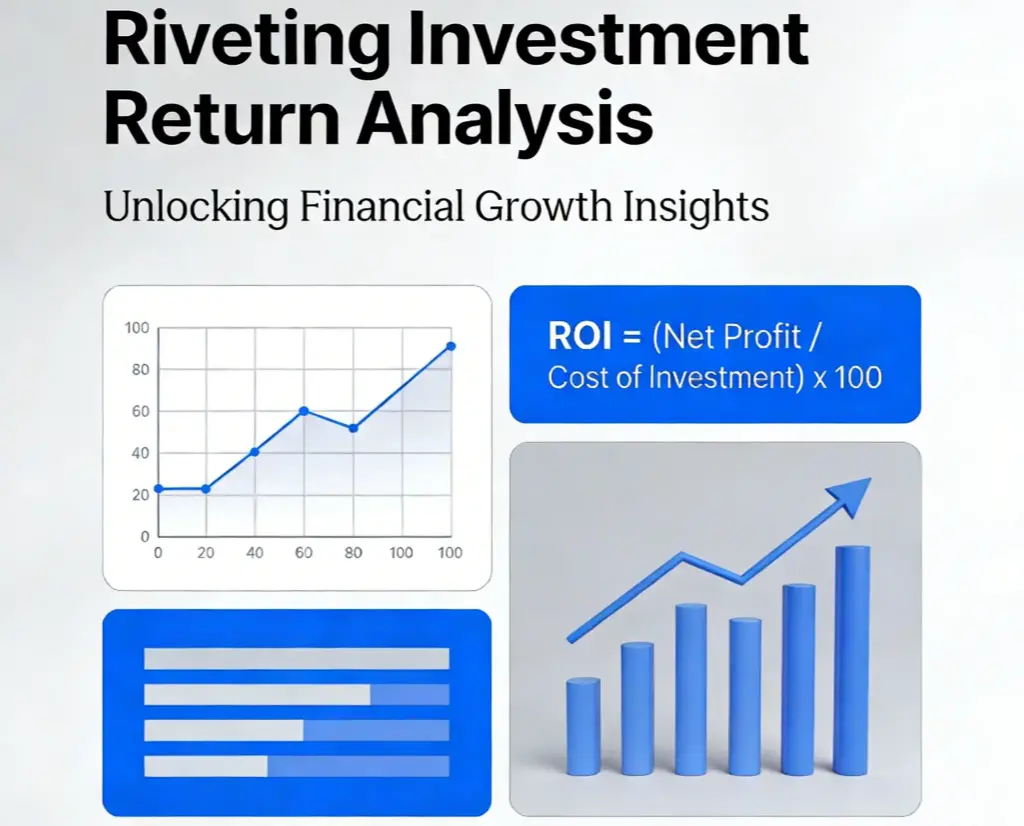
The core formula is: Return on Investment Period = (Servo Machine Investment – Traditional Machine Investment) / Annual Operating Revenue. The key is accurately calculating “annual operating revenue.” Every return on investment analysis for riveting machines must include four revenue sources.
2. Four Sources of Revenue and Quantitative Estimation
Increased Productivity: Due to high speed, rapid changeover, and high reliability, the overall equipment effectiveness (OEE) of servo-driven riveting machines is typically 20%-50% higher than traditional pneumatic/hydraulic systems. More qualified parts can be produced in the same amount of time, directly increasing revenue.
Improved Quality/Yield: The superior repeatability and consistency of the servo system significantly reduces riveting scrap/rework rates from the traditional 2%-5% to below 0.5%.
Reduced Energy Consumption: Servo systems use energy on demand, with extremely low standby power consumption. Compared to continuously running compressors or hydraulic power units, this can save 50%-80% in electricity costs.
Reduced Maintenance and Spare Parts Costs: The mechanical structure eliminates the hassle of hydraulic leaks and pneumatic system maintenance, reducing annual maintenance costs by over 70%. These four factors drive any return on investment analysis for riveting machines.
3. Comprehensive ROI Calculation Example (USD)
Assume a servo-driven riveting machine costs $28,600 more than a traditional solution (based on 200,000 RMB at 7 RMB/USD):
| Revenue Source | Annual Savings (USD) |
|---|---|
| Increased Productivity | ~$21,400 / year |
| Improved Quality/Yield | ~$57,100 / year |
| Energy Savings | ~$3,600 / year |
| Maintenance Savings | ~$2,900 / year |
| Total Annual Revenue | ~$85,000 / year |
ROI Period = $28,600 / $85,000 ≈ 0.34 years (about 4 months)
This demonstrates a payback period of under six months, with quality and efficiency gains driving the majority of savings. Actual results will vary based on production volume, existing yield rates, electricity prices, and part value—but the direction is clear.
Before committing capital to any high‑stakes venture, a Riveting Investment Return Analysis can uncover both the opportunities and hidden risks that raw data often miss. Ultimately, a well‑executed Riveting Investment Return Analysis serves as the foundation for sound decision‑making and long‑term value creation.
4. Strategic Value Beyond Financial Data
Key strategic advantages that a complete riveting investment return analysis should include:
Enhanced process capability to accept higher-margin, technically demanding orders
Full-process data traceability meeting audit requirements of automotive, aerospace, and medical customers
Brand reputation improvement through defect reduction and zero-defect capabilities
Intelligent manufacturing readiness for Industry 4.0 and IIoT integration
Key Strategic Advantages: Enhanced process capabilities enable the acceptance of higher-margin orders; full-process data traceability meets the audit requirements of high-end customers and enhances brand reputation; it paves the way for intelligent manufacturing.
Value Proposition: We can provide customized return on investment analysis based on your actual production data, clearly demonstrating the investment value with concrete evidence.
Conclusion
Choosing a servo-driven orbital riveting machine should be considered a “productivity capital investment” aimed at reducing total operating costs and enhancing core competitiveness. A thorough riveting investment return analysis reveals that when the perspective shifts from initial purchase price to total lifecycle value, the high return on investment becomes immediately evident. Make the data-driven choice for your next capital expenditure.
Ready to start your own riveting investment return analysis? Contact ShunTai Technology today to request a free, no-obligation ROI assessment. Our engineers will collect your production parameters—shift volume, current scrap rate, local electricity price, and maintenance logs—and deliver a customized riveting investment return analysis within five business days. You will see exactly how much you can save, how quickly you will recover your investment, and which servo model best fits your application. Don’t leave money on the table; let the numbers guide your decision.