
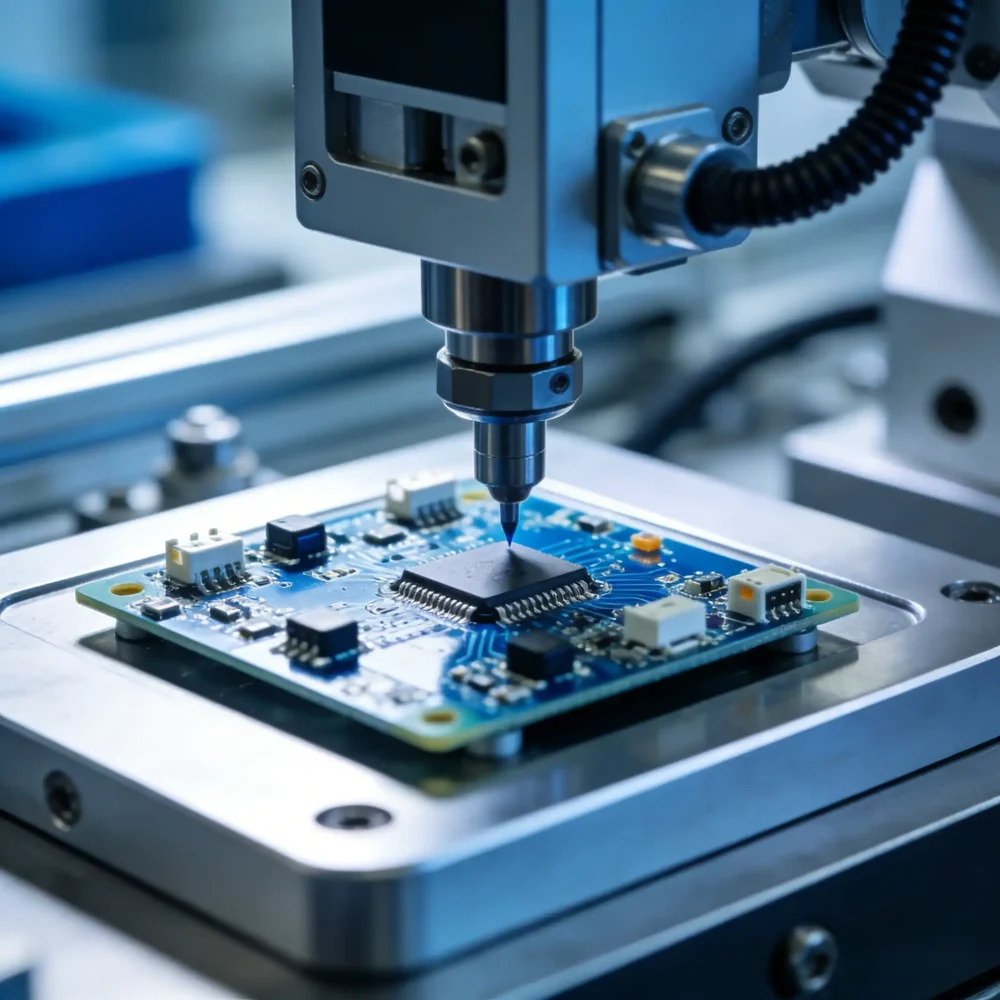
Micro-riveting solutions are becoming essential for modern electronics manufacturing. As consumer electronics and smart wearable devices rapidly evolve towards miniaturization, integration, and enhanced aesthetics, micro-riveting for internal precision components and external visible parts faces stringent requirements such as extremely high precision, zero deformation, no scratches, and high efficiency. Traditional riveting techniques struggle to meet these demands, thus requiring specialized micro-precision riveting solutions. This article explores micro-riveting solutions for today’s challenges.
1. Typical Challenges of Micro-Riveting
Let me walk you through the four big challenges that micro-riveting solutions must address.
Extreme Miniaturization: Rivets are typically smaller than 1 mm, even 0.3 mm, requiring equipment with force resolution at the millinewton level and stroke control accuracy at the micrometer level. Without specialized micro-riveting solutions, you can’t even see what you’re doing.
Sensitive and Fragile Materials: Widely used materials include aluminum/magnesium alloys, thin-walled stainless steel, and metal-plastic combinations, which are highly sensitive to impact and stress.
Space Constraints: Precision components surround the riveting area, and any minor scratches or dents mean product rejection.
High Throughput: Must be synchronized with the speed of high-speed SMT production lines or automated assembly lines. Good micro-riveting solutions handle all four challenges simultaneously.
2. Micro-Precision Orbital Riveting Solutions
Here’s what effective micro-riveting solutions look like in practice.
Ultra-Precision Micro-Drive System: Micro servo motors or piezoelectric actuators directly drive the spindle, combined with micrometer encoders, to achieve micrometer-level positioning and millinewton control, enabling “gentle” and precise forming of miniature rivets. This drive system is a cornerstone of modern micro-riveting solutions.
Micro-Tooling Technology: Ultra-small size and ultra-high strength punches, made of special hard alloy materials, with precision grinding and special heat treatment to improve impact toughness.
Polishing and Coating: Mirror-finish working surface, coated with a low-friction coating to eliminate material adhesion and scratches.
Alignment Accuracy: Using a laser alignment system to ensure concentricity between the micro-punch and anvil within 0.005 mm. Precision alignment separates good micro-riveting solutions from bad ones.
Fine Trajectory Programming: Allows defining extremely low contact speed, forming speed, and dwell curves to perfectly protect fragile parts.
Monitoring and Protection: Built-in high-sensitivity micro force sensor provides real-time micro force-displacement curves. Extremely narrow force and position tolerance ranges can be set, and the system stops immediately if the range is exceeded.
Vision Alignment System: Integrated high-resolution micro camera for automatic identification and sub-pixel level alignment compensation between the rivet and the hole.
Debris Removal: Miniature vacuum nozzles integrated around the punch remove any tiny metal particles in real time, ensuring the cleanliness of the product’s interior. All these features come together in complete micro-riveting solutions.
3. Why Micro-Riveting Solutions Matter More Than Ever
Let me add some context here. The global miniaturized electronics market was valued at $55.27 billion in 2025 and is expected to reach $107.04 billion by 2032, growing at nearly 10% annually [market research, 2025]. Wearable devices alone grew from $38.37 billion in 2025 to projected $59.32 billion by 2032. As these products get smaller and more powerful, the demand for micro-riveting solutions will only increase.
Also, cleanliness is critical in micro-electronics assembly. ISO 14644-1 classifies Class 1,000 cleanrooms (ISO Class 6) as ideal for microelectronics manufacturing, allowing up to 1,000 particles (≥0.5 µm) per cubic foot. Many micro-riveting solutions now incorporate integrated vacuum debris removal to meet these stringent standards — because a single tiny particle can ruin an entire batch of miniature devices.
So yeah, micro-riveting solutions aren’t just nice to have anymore. They’re a competitive necessity.
Conclusion
Micro-riveting in electronic products is a precision process requiring sub-millimeter accuracy. Shuntai Technology not only provides high-precision equipment such as the ST-MSF-Micro series, but also offers complete technical solutions, including ultra-precision drives, specialized micro-tools, intelligent control, and clean manufacturing, helping customers overcome manufacturing challenges at the smallest scales and enhance product value and reliability. If you’re manufacturing miniature electronics, you need micro-riveting solutions that deliver repeatable, defect-free results every time.