
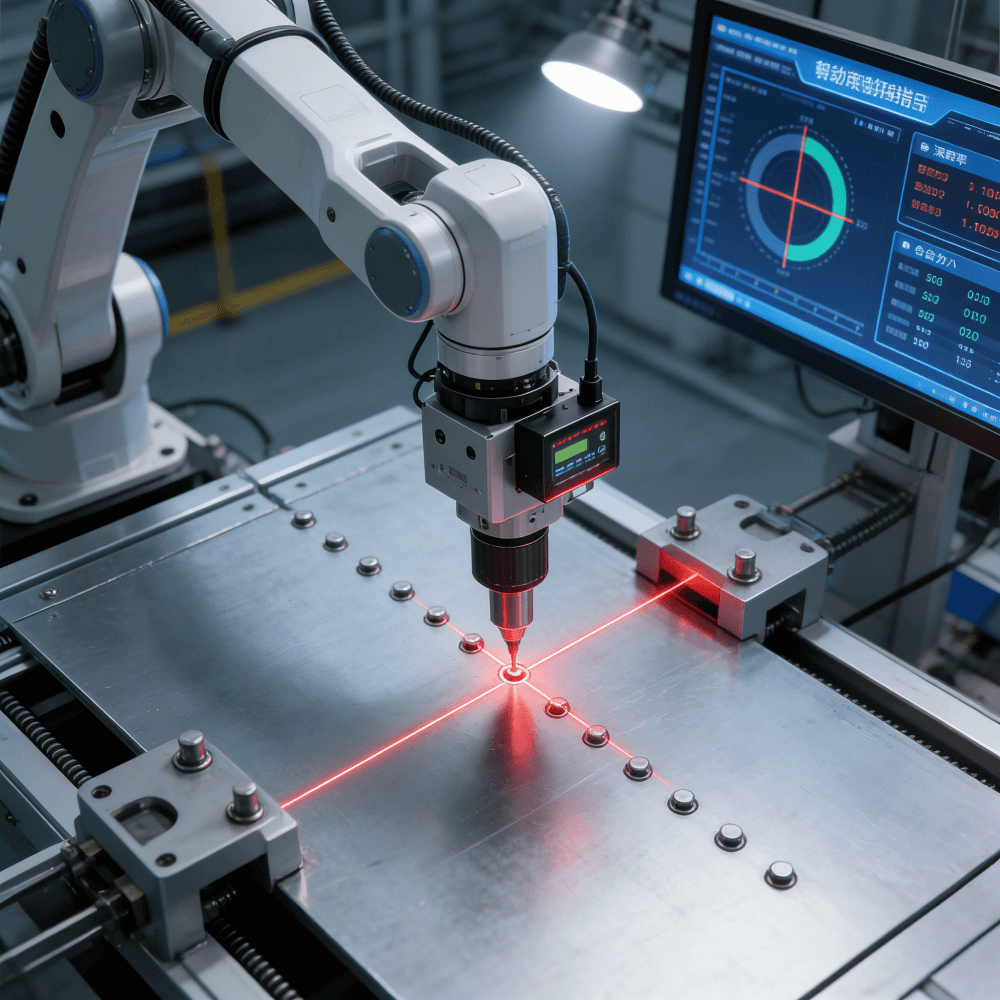
The development of core riveting technology requires vision, investment, and persistence.
In 2016, after in-depth analysis of industry development trends and customer needs, the company made a strategic decision: to launch independent research and development of riveting equipment. We recognized that to truly solve the connection challenges in manufacturing, we must master core technologies. This marked the beginning of our systematic development of core riveting technology. To this end, the company invested dedicated R&D funds and assembled a riveting technology R&D team of 8 engineers, focusing on the research and application of servo-controlled riveting technology. The development of core riveting technology started with the right people.

The R&D team started with the most basic research on connection mechanisms, systematically analyzing the technical limitations of traditional pneumatic and hydraulic riveting. Through extensive experimental data accumulation and theoretical analysis, we determined a technical route centered on servo motor drive and began the design and manufacturing of the first servo riveting prototype. Every step in the development of core riveting technology was deliberate and data-driven.
Throughout the R&D process, the team overcame numerous technical challenges, including control system integration, motion trajectory optimization, and precise pressure control, completing the assembly and debugging of the first prototype in eight months. The successful development of this prototype not only verified the feasibility of our technical route but also accumulated valuable experience for the company‘s subsequent product development. This milestone proved that our development of core riveting technology was on the right track.
Let me add some context about why the development of core riveting technology was so challenging in 2016.
Back then, most riveting equipment in China used pneumatic or hydraulic systems. Servo technology was expensive and not widely understood in the joining industry. Our team had to learn from scratch. We tore down competitor machines, read hundreds of papers, and ran thousands of test cycles. The development of core riveting technology meant building knowledge that didn’t exist in our shop before.
Here’s what our team discovered during the development of core riveting technology.
Pneumatic systems fluctuate with air pressure changes. Hydraulic systems suffer from oil temperature drift. Both lack the precision needed for high-reliability joints. Servo motors, by contrast, offer closed-loop feedback and millisecond-level response. That insight drove our entire development of core riveting technology roadmap. We chose a technical route centered on servo motor drive because it offered deterministic control—not guesswork.
One more thing about the development of core riveting technology that people overlook. The hardware is important, but the software matters just as much. Our team wrote the first version of the motion control algorithm in C++. We tuned PID parameters for weeks to get the balance between speed and smoothness. That level of detail in the development of core riveting technology is what separates a prototype from a production-ready machine.
Conclusion
The successful development of Shuntai‘s first servo riveting prototype in 2016 was just the beginning. The development of core riveting technology has continued ever since—through second-generation machines, third-generation mass production, and now the ST-MSF series. What started with an 8-engineer team and a single prototype has grown into a full product line trusted by automotive, appliance, and electronics manufacturers worldwide. The development of core riveting technology is never finished. But we’ve built a foundation that will carry us for decades to come.
Since its inception, Shuntai has remained steadfastly focused on the development of riveting technology, continuously iterating upon our techniques to create advanced and highly stable riveting processes. We are committed to continuing our journey in the field of riveting—constantly exploring and innovating—to realize the full potential of intelligent manufacturing through our riveting technologies.