
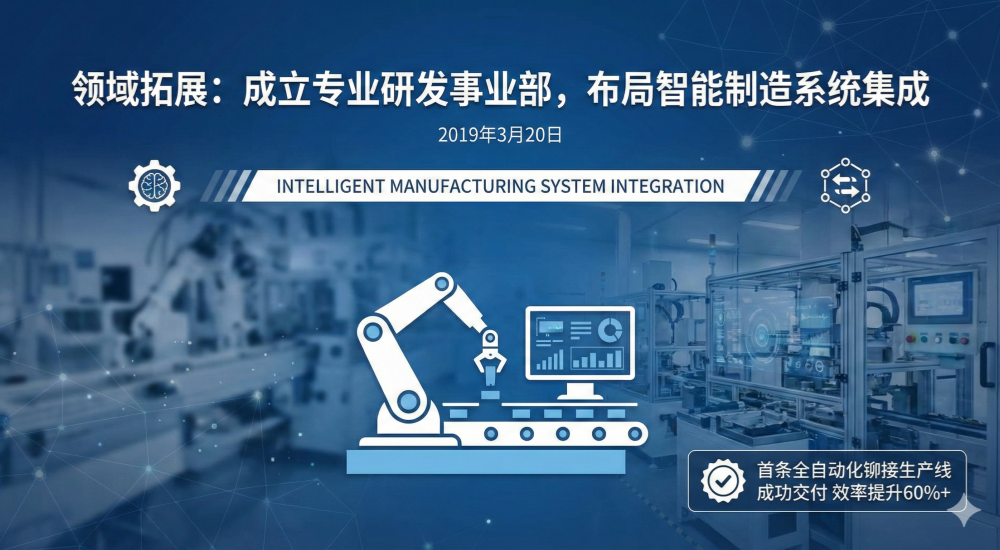
Building a robust intelligent manufacturing system requires more than just buying robots — it requires deep integration.
In 2019, to adapt to the new trend of intelligent transformation and upgrading in the manufacturing industry, the company decided to establish a dedicated R&D division, expanding its business scope from single-machine equipment to overall solutions for automated production lines. This move was all about creating a complete intelligent manufacturing system from the ground up. The division focuses on the research and development of smart manufacturing system integration technology, particularly the deep integration of servo riveting technology with advanced technologies such as robot applications, machine vision, and the Internet of Things. Every component of our intelligent manufacturing system works together seamlessly.
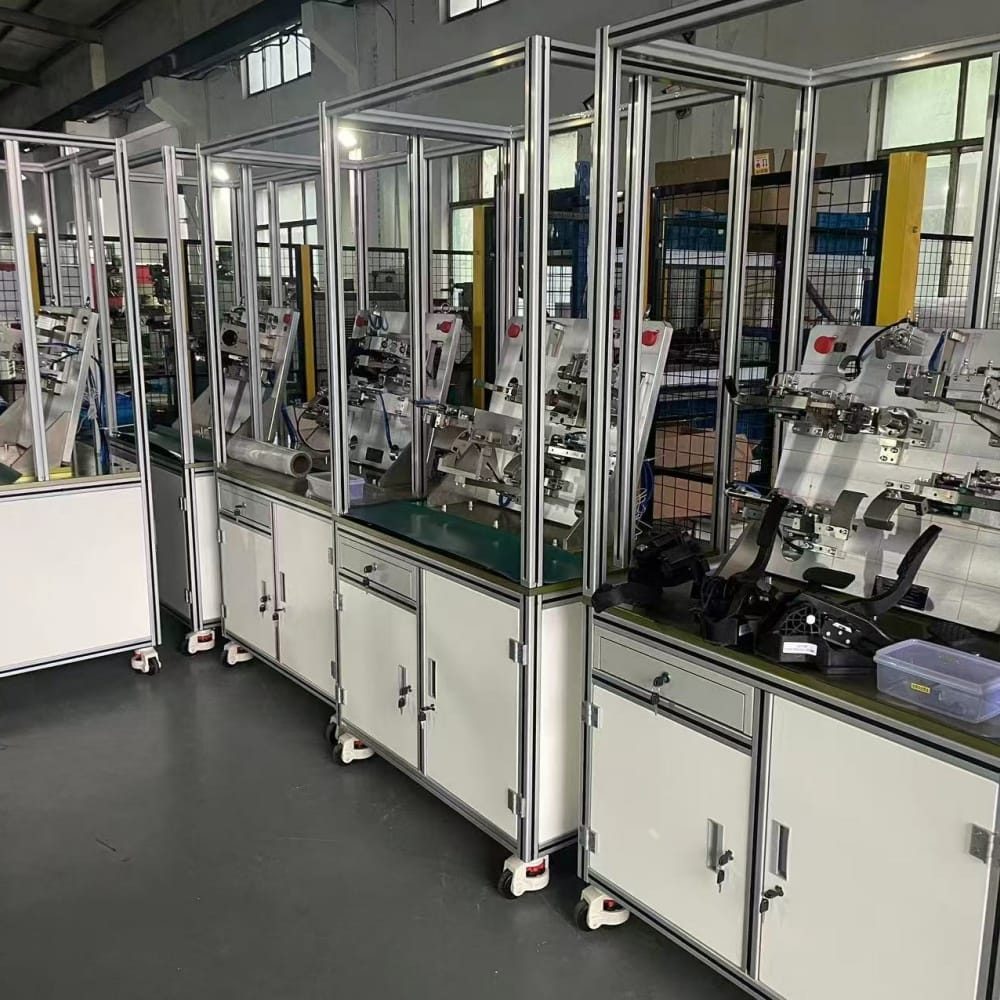
The R&D division has assembled a multidisciplinary technical team, including mechanical automation engineers, electrical engineers, software engineers, and system integration experts. This team is the brain behind our intelligent manufacturing system. We have established a smart manufacturing laboratory equipped with advanced R&D equipment such as industrial robots, machine vision systems, and data acquisition devices. By undertaking multiple production line automation transformation projects, we have accumulated rich system integration experience and formed a complete service capability ranging from demand analysis, solution design, equipment selection, and system integration to commissioning and delivery.
That experience directly feeds into every intelligent manufacturing system we deliver.
This year, we successfully delivered our first fully automated riveting production line, achieving full automation from parts feeding, precise positioning, multi-process riveting to finished product unloading, resulting in a production efficiency increase of over 60%. This result proves the power of an integrated intelligent manufacturing system.
Let me add some context about what makes an intelligent manufacturing system truly work.
It’s not just about connecting machines. The real value comes from data flow and decision-making. In our fully automated line, sensors collect cycle times, force curves, and alignment data at every station. That data feeds into a central controller that adjusts parameters in real time. That’s an intelligent manufacturing system that learns and adapts.
Another thing people often miss about an intelligent manufacturing system is the software layer.
Our R&D division developed custom middleware that translates between different industrial protocols — OPC UA, Modbus TCP, and proprietary robot languages. This means our can integrate equipment from multiple vendors without custom code for every combination. So when a customer has an existing conveyor system or a legacy press, we don’t force them to rip it out. The intelligent manufacturing system just wraps around it and makes it smarter.
Looking ahead, Shuntai Automation is scaling up its intelligent manufacturing system offerings.
We’re currently working on a modular integration platform that will reduce deployment time by 40%. The platform includes pre-tested interfaces for common robot brands, vision systems, and PLCs. That modular approach will make our intelligent manufacturing system even more accessible to mid-sized manufacturers.
Conclusion
From single-machine sales to full production line automation, Shuntai Automation has transformed its business around the concept of the intelligent manufacturing system. Our dedicated R&D division, multidisciplinary team, and state-of-the-art lab all serve one purpose: to deliver intelligent manufacturing system solutions that boost efficiency, reduce downtime, and provide full traceability.
Intelligent manufacturing serves as the bedrock of production and represents the future trajectory of the manufacturing sector. As the global population enters a phase of rapid aging, there is a growing demand for products that enhance human convenience. Concurrently, the manufacturing industry faces a significant labor shortage. Consequently, it has become imperative to implement intelligent manufacturing within the sector to alleviate physical labor burdens, boost production efficiency and workplace safety, enhance overall human well-being, and propel the advancement of human civilization to new heights.