
In 2023, Ningbo Shuntai Automation made a big decision. We invested in and set up a dedicated riveting technology research center. This wasn’t just another lab. It was a strategic move to solve real manufacturing problems. Our riveting technology research center focuses on new material joining technologies — especially composite materials and dissimilar material connections. Let me walk you through what we’ve built.
1. People: The Core of the Research Center
You can have all the fancy equipment in the world, but without the right people, it’s useless. Our riveting technology research center brings together experts from three fields: materials science, mechanical engineering, and automation control. We’ve got PhDs, experienced process engineers, and former shop-floor technicians. They speak both theory and practice.
Right now, the center has 12 full-time researchers. Four of them specialize in composite material joining, three in dissimilar metals, and five in process automation and data analysis. We also bring in university interns and visiting scholars. The riveting technology research center is always growing its talent pool.
2. Lab Facilities: Where the Magic Happens
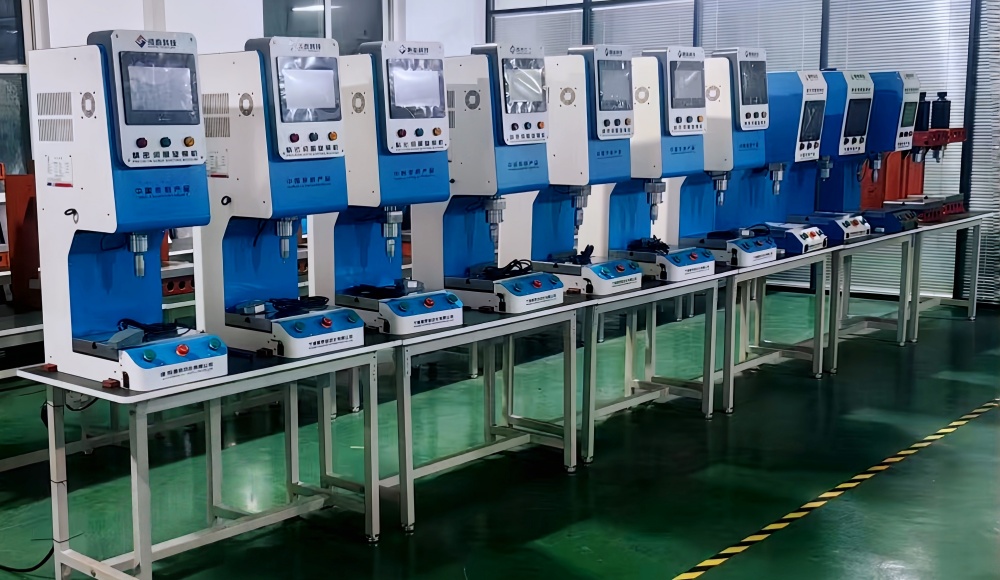
A research center needs good tools. Our riveting technology research center has a 500-square-meter lab with full testing capabilities. We’ve installed three servo orbital riveting machines (including the ST-MSF series), a universal testing machine, a metallographic microscope, and a high-speed camera system. We also have environmental chambers to test joints at extreme temperatures. Every riveting technology research center should have this kind of setup — but not many do.
We also built a dedicated acoustic emission monitoring system. This lets us detect micro-cracks during the riveting process in real time. The lab at our riveting technology research center runs 24/7 for critical projects.
3. Technical Breakthroughs: Solving Real Problems
What has our riveting technology research center actually achieved? Let me give you a few examples.
First, we solved the problem of riveting carbon fiber reinforced plastic (CFRP) to aluminum. Traditional methods caused delamination and fiber breakage. After six months of testing, our team developed a two-step low-damage process that reduces defect rates from 12% to under 0.8%. That’s the kind of result our riveting technology research center delivers.
Second, we created a new surface pretreatment method for riveting engineering plastics. No more cracking around the rivet head. This technique is now being used by three automotive parts suppliers in Zhejiang province. The riveting technology research center is proud of that work.
Third, we optimized the riveting parameters for high-strength steel to magnesium alloy. The joint fatigue life improved by 40% compared to standard methods.
4. Exploring the Frontiers: What’s Next for the Center
We don’t just solve today’s problems. Our riveting technology research center also looks ahead. Right now we’re working on three frontier areas:
Smart riveting with built-in sensors for real-time joint health monitoring.
AI-assisted parameter optimization — the machine learns from each cycle and adjusts automatically.
Zero-damage riveting for ultra-thin composites (less than 0.5mm thick).
The riveting technology research center has already filed four patent applications related to these topics. We expect to file three more by the end of this year.
5. Vision and Goals: Where We’re Headed
What does our riveting technology research center want to become? By 2028, we aim to be one of the top three riveting technology research facilities in East China. We want to publish at least 10 peer-reviewed papers, establish two industry standards, and train 50+ engineers through our open training programs. The also plans to launch a yearly technical symposium where we share our findings with customers and peers.
Long-term, we see our riveting technology research center as a hub for open innovation. We’ll collaborate with universities, share data (with IP protection), and help the whole manufacturing industry move forward. That’s our vision.
Conclusion
Ningbo Shuntai Automation’s riveting technology research center is more than a department. It’s our commitment to the future of reliable, efficient, and smart joining. If you’re facing a tough riveting challenge — composites, dissimilar materials, low-damage requirements — reach out. Our is ready to help you solve it.